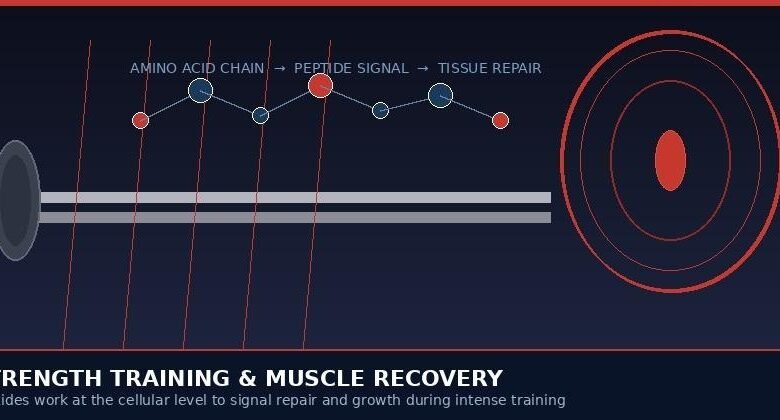
Peptides are short chains of amino acids, the fundamental building blocks of protein. Unlike full proteins, peptides are small enough to cross biological barriers quickly, allowing them to signal specific physiological responses in the body. In the context of bodybuilding and athletic performance, peptides are used to influence muscle repair, growth hormone secretion, inflammation control and connective tissue regeneration.
The difference between simply taking protein and using targeted peptides is like the difference between sending a general letter and a precision guided message. Peptides can tell your body exactly what to do and where to do it.
Key Numbers at a Glance
| Abbreviation | Meaning | Detail |
|---|---|---|
| BPC | Body Protective Compound | Original derivation of BPC-157 |
| 157 | Amino Acid Sequence | 15 amino acid pentadecapeptide |
| 800mcg | Potency per serving | FlexMax by Regen Labs dosage |
| 60 | Capsules per bottle | 30-day supply no injections |
Types of Peptides Used in Bodybuilding
| Peptide Type | Primary Function | Common Use Case |
|---|---|---|
| BPC-157 | Tissue repair, tendon/ligament healing, anti-inflammatory | Injury recovery, joint protection |
| GHRP (Growth Hormone Releasing Peptides) | Stimulates growth hormone release | Muscle mass, fat reduction |
| IGF-1 | Insulin like growth factor, muscle cell growth | Hypertrophy, recovery speed |
| TB-500 (Thymosin Beta-4) | Promotes cell migration and regeneration | Wound healing, flexibility |
| Follistatin | Blocks myostatin, enabling muscle growth | Myostatin reduction, mass building |
Peptides work at the cellular level to signal repair and growth the science behind BPC-157 and elite athlete recovery.
How BPC-157 Supports Muscle Repair and Recovery
BPC-157 short for Body Protective Compound-157 is a pentadecapeptide (15 amino acids) originally isolated from gastric juice. Decades of research, primarily in animal models, have documented a remarkable range of healing and protective properties that make it uniquely interesting for athletes.
The Mechanisms Behind BPC-157’s Effects
Research suggests BPC-157 works through several interconnected pathways:
- Angiogenesis: BPC-157 promotes the formation of new blood vessels, improving nutrient and oxygen delivery to damaged tissue a critical step in healing.
- Tendon cell (tenocyte) growth: Studies show BPC-157 can significantly stimulate the proliferation of tendon fibroblasts, helping to repair micro-tears that accumulate with heavy lifting.
- Nitric oxide upregulation: BPC-157 modulates nitric oxide pathways, which supports muscle pump, blood flow and vascular health.
- Inflammatory regulation: Rather than simply suppressing inflammation (which can impair adaptation), BPC-157 appears to modulate it allowing controlled healing without blunting the training stimulus.
- Growth hormone receptor interaction: Emerging research suggests BPC-157 may interact with growth hormone signaling pathways, potentially amplifying recovery signals post exercise.
Physical Activity vs. Exercise vs. Physical Fitness: Why the Distinction Matters
When discussing how supplements like BPC-157 and peptides fit into your routine, it’s important to understand where they’re most applicable and that starts with understanding different categories of movement.
| Term | Definition | Example |
|---|---|---|
| Physical Activity | Any body movement that uses energy broad and unstructured | Walking to work, household chores, climbing stairs |
| Exercise | Planned, structured, repetitive physical activity with a specific goal | Weightlifting program, 5K training, HIIT sessions |
| Physical Fitness | Measurable outcome: cardiovascular endurance, muscular strength, flexibility, body composition | VO2 max, 1-rep max, body fat %, recovery rate |
How to Reduce Myostatin and Why It Matters for Muscle Growth
Myostatin is a protein produced and secreted by muscle cells that acts as a natural brake on muscle growth. Evolutionarily, it prevents muscles from growing so large that they become metabolically unsustainable. But for athletes aiming for maximum hypertrophy, myostatin is essentially the enemy.
See also: Simple Tips to Improve Your Health and Well-Being Every Day
What Happens When You Decrease Myostatin?
Blocking or reducing myostatin allows muscle cells to enter a higher state of protein synthesis and growth. Animals with natural myostatin mutations (like the famously muscular Belgian Blue cattle) develop dramatically more muscle mass with lower fat, a compelling proof of concept.
Evidence Based Ways to Reduce Myostatin
- Heavy resistance training: Progressive overload is the most well documented natural myostatin inhibitor. Compound lifts(squat, deadlift, bench) produce the greatest suppression effect.
- Follistatin supporting compounds: Follistatin is a natural myostatin antagonist. Certain supplements and peptide protocols aim to upregulate follistatin expression.
- Adequate sleep and testosterone optimization: Low testosterone and poor sleep are associated with elevated myostatin. Prioritizing recovery directly impacts your myostatin to follistatin ratio.
- Epicatechin supplementation: Found in dark chocolate, epicatechin has demonstrated myostatin inhibiting properties in small clinical studies.
- BPC-157 and recovery peptides: By reducing systemic inflammation and supporting tissue quality, recovery focused peptides may indirectly support a more favorable anabolic environment, one where myostatin’s inhibitory signal is less dominant.
Pre-Workout, Side Effects and the Role of Peptides in Your Stack
Two of the most common questions in sports nutrition are about pre-workout timing and side effects and understanding these helps clarify where peptides like BPC-157 fit in.
How Long Does Pre-Workout Take to Work?
Most pre-workout supplements(containing caffeine, beta-alanine, citrulline) reach peak effectiveness 30–60 minutes after ingestion. The active window typically lasts 1–3 hours depending on your caffeine metabolism rate and the specific formulation.
How Long for Pre-Workout to Wear Off?
Caffeine has a half-life of approximately 5–6 hours in most adults, meaning a 300mg dose at 5pm could still leave 150mg active at 10pm, affecting sleep quality. Total clearance typically takes 8–12 hours, though this varies significantly by individual.
How to Get Rid of Pre-Workout Side Effects
| Side Effect | Cause | Mitigation Strategy |
|---|---|---|
| Tingling/Paresthesia | Beta-alanine overload | Split dose or choose slow release beta alanine |
| Jitters/Anxiety | High caffeine dose | Reduce dose, add L-theanine, choose stimulant free version |
| Crash/Fatigue | Caffeine clearance + blood sugar dip | Eat 30–60 min before workout, hydrate well |
| Insomnia | Late caffeine intake | Cut off caffeine by 1–2 PM; use stimulant-free PM options |
| GI Distress | Creatine, magnesium or sugar alcohols | Take with food, reduce creatine loading phase |
FEATURED PRODUCT – REGEN LABS
| BPC-157 FlexMax 800mcg – 60 Capsulesby Regen Labs Regen Labs’ FlexMax delivers a research aligned 800mcg of BPC-157 per serving alongside the proprietary Wolverine Peptide Blend formulated specifically to support connective tissue integrity, reduce exercise induced inflammation and accelerate the return to full training capacity. ✔ 800mcg BPC-157 per serving ✔ Wolverine Peptide Complex ✔ Builds Strength & Endurance✔ 60 capsules/30-day supply ✔ No injections required → Visit: https://regenlabs.com/products/flexmax |
The “Wolverine Peptide”, What It Is and Why It’s in FlexMax
The nickname “Wolverine Peptide” refers to a class of regenerative peptide compounds that work synergistically with BPC-157 to support what researchers call “accelerated wound and tissue healing.” The reference to Marvel’s Wolverine whose superpower is near instant healing is apt: the goal of these peptide stacks is to dramatically compress the recovery window between hard training sessions.
Regen Labs has incorporated this compound into the FlexMax formula to work alongside BPC-157 in a two-pronged recovery approach: BPC-157 handles the vascular and connective tissue repair signals, while the Wolverine Peptide complex supports broader cellular regeneration and strength building.