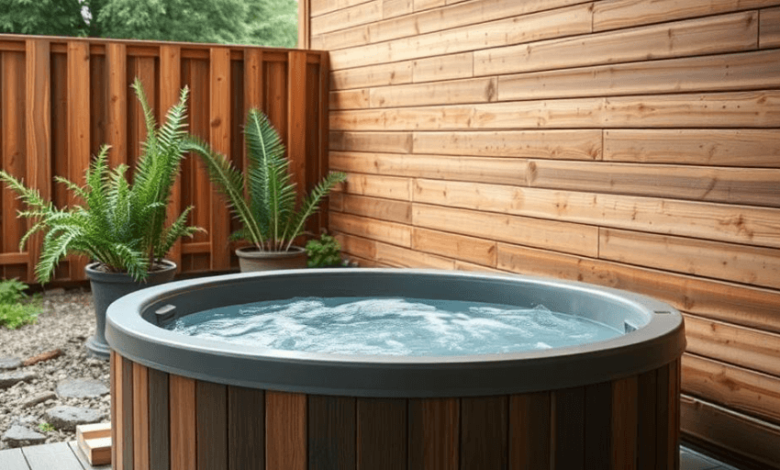
Cold Plunge Guide: Tubs, Chillers, and Protocols is worth evaluating through the homeowner’s real week, not a perfect catalog photo. The best setup is the one that gets used, stays safe, and does not become a maintenance headache.
That story captures the single most common mistake in this category. People obsess over the product and ignore the pad, the electrical run, and the climate realities of where they actually live. The boring truth is that a cold plunge purchase is roughly half equipment decision and half construction project, and the construction side is where the money gets wasted or saved.
This guide covers the real specs worth reading, what the install actually involves, what the research says (and doesn’t say), and the full cost picture. If you get those four things right, the unit practically takes care of itself.
What Actually Matters on a Spec Sheet
Most cold plunge spec sheets list a dozen numbers. About five of them matter for a residential buyer.
Tub volume: Typical home units hold 80 to 120 gallons. That’s enough water for a full-body immersion for most adults up to about 6’2″. If you’re taller, check interior depth specifically, not just total gallon capacity.
Chiller size: This is the one people get wrong most often. A 1/3 HP chiller can hold 50°F in a small insulated tub if you live somewhere temperate. Put that same chiller in a garage in Phoenix in August and it will run almost continuously, burning through electricity and shortening compressor life. A 1 HP chiller is overkill for a 90-gallon tub in Seattle. Match the chiller to the volume and the climate. Read the manufacturer’s sizing chart instead of trusting a forum recommendation from someone in a different state.
Filtration and sanitation: Look for a combination of ozone or UV sanitation plus a 5-micron filter cartridge. This is what lets you go 6 to 12 weeks between full drains. Units that skip the sanitation system will need water changes every week or two, which gets old fast.
Insulation and tub material: Molded polyethylene is the budget standard. Stainless steel is the commercial-grade option. Insulation thickness determines how hard the chiller works between sessions. Cheap tubs with thin walls in hot climates are basically space heaters for your water bill.
Target water temperature: 40°F to 55°F is the working range for most protocols. If a unit can’t hold below 50°F in your local summer conditions, you’ll be disappointed.
One more thing that won’t be on the spec sheet: noise. A chiller runs at roughly 45 to 55 dB at one meter. That’s about the volume of a quiet conversation, but it’s a constant mechanical hum. If your patio shares a fence with a light-sleeping neighbor, placement matters.
The Install Nobody Wants to Talk About
The unit shows up on a pallet. Then what?
A full cold plunge tub, water included, puts 800 to 1,200 pounds on a small footprint. That’s the weight of a riding mower concentrated on about 16 square feet. You need a pad that won’t settle, crack, or shift.
For most backyard installs, a 4-inch compacted gravel pad with proper drainage works. If you’re on soft soil, in a freeze-thaw climate, or placing the tub on an existing deck, pour a 4-inch reinforced concrete pad instead. A pad that settles after the unit is installed is genuinely expensive to fix, because you have to drain the tub, move it, redo the pad, and start over. Derek learned this the hard way.
Electrical is simpler than people expect. Most residential cold plunge units run on a standard 110V outlet. The chiller, ozone, and filtration components are factory-wired. Your job is to plug it into a properly grounded GFCI outlet on its own dedicated circuit. If the nearest outlet is more than 25 feet away, shares a circuit with a kitchen appliance, or if you’re installing a commercial-grade 240V chiller, hire a licensed electrician. This is a non-negotiable. Water and electricity in proximity demand proper grounding and GFCI protection.
Water maintenance is the ongoing commitment. Test pH and sanitizer weekly. Replace filter cartridges per manufacturer schedule. Drain and refill on whatever interval the manual specifies (usually every 6 to 12 weeks with a good sanitation system). It takes about 10 minutes a week. That’s less time than you spend mowing.
What the Research Actually Shows
Cold-water immersion research has gotten substantially better in the last decade, though it still has gaps.
Heinonen and Laukkanen reviewed cold-water immersion outcomes in 2018 (Frontiers in Physiology) and reported reductions in self-reported muscle soreness, modest improvements in mood, and measurable changes in catecholamine signaling after 2 to 5 minute immersions at 50°F to 59°F. The catecholamine response is real and reproducible: your body dumps norepinephrine when you get into cold water. That’s the alertness and mood lift people describe.
A 2022 systematic review by Allan and colleagues (European Journal of Applied Physiology) examined cold-water immersion after resistance training and found recovery benefits, but with an important caveat. Very frequent cold immersions immediately after lifting may blunt some hypertrophy signaling. The practical takeaway for home users: keep cold sessions between 2 and 5 minutes, and separate them from heavy resistance training by at least 4 hours when muscle growth is a priority.
Here’s my genuinely opinionated take on the research landscape: the mood and alertness benefits of cold plunging are more consistently supported by the literature than the recovery benefits. If you’re buying a cold plunge primarily for post-workout recovery, the evidence is mixed and protocol-dependent. If you’re buying one because you feel noticeably better, sharper, and more even-keeled on days you plunge, the catecholamine data supports your experience, and that’s a perfectly valid reason to spend money on a tub.
The cardiovascular load is not optional reading. Cold exposure spikes heart rate and blood pressure within seconds. Think of it like a sudden, whole-body stress test. Adults with arrhythmias, uncontrolled hypertension, Raynaud’s phenomenon, or who are pregnant need to clear cold immersion with a physician before any home use. Not a suggestion. A requirement.
The All-In Cost Picture
The sticker price on a cold plunge unit is not the all-in cost. Budget the unit, the pad, the wiring, any permits, and the first year of consumables (filters, test strips, water treatment).
Residential insulated tub with integrated chiller: $4,500 to $7,500. This is the mainstream category: molded or composite tub, 1/3 to 1 HP chiller, ozone or UV sanitation, decent insulation.
Commercial-grade stainless build with full filtration: $9,000 to $14,000. Heavier, longer-lasting, often quieter chillers, better insulation. Worth it if you plan to use it daily for a decade.
Stock-tank DIY with manual ice: $400 to $900. You’ll get the same water temperatures, but you’re buying and hauling ice for every session. It works, but it’s the cold plunge equivalent of washing dishes by hand because you don’t want to buy a dishwasher.
Pad: $400 to $900 for gravel, $1,200 to $2,400 for concrete.
Electrical run (if needed): $600 to $1,800 for a dedicated circuit or 240V run.
HSA/FSA reimbursement: Some home wellness equipment can be reimbursed through HSA or FSA accounts with a Letter of Medical Necessity (LMN) on file. Services like TrueMed issue LMNs after a short clinician review for conditions where cold therapy is a recognized treatment input. Eligibility is patient-specific and the IRS rules are strict. Talk to your tax advisor before counting on this.
Appraisers generally won’t add dollar-for-dollar value for a cold plunge, but a well-built outdoor wellness setup is increasingly treated as a selling feature in Northeast and Pacific Northwest markets.
Where to Compare Actual Models
Once you’ve sorted out your site, electrical, and budget, the next step is comparing real lineups. For a closer look at the cold plunge side, Sweat Decks’s cold plunge & contrast therapy guide is the reference we point readers to for full specs, pricing, and warranty details. Bookmark it before you start getting quotes on pad work.
When to Call a Pro (and Which Kind)
Three moments in a cold plunge project where professional help pays for itself:
A contractor or experienced handyman for the pad. Especially in freeze-thaw climates or on soft soil. Getting this right the first time costs a fraction of fixing it later.
A licensed electrician for any 240V work or any situation where you need a dedicated circuit run. Some municipalities require an electrical permit even for 110V outdoor circuits. Call your local building department before ordering.
A physician before starting any cold-exposure protocol if you have an arrhythmia, uncontrolled hypertension, a recent cardiac event, Raynaud’s phenomenon, are pregnant, or are managing a chronic condition. A 10-minute conversation with your doctor is the cheapest investment in the entire project.
FAQs
How loud is a cold plunge chiller?
A typical residential chiller runs at 45 to 55 dB at one meter, roughly the volume of a quiet conversation. Place the unit where the hum won’t bother neighbors or adjacent bedrooms.
Can I run a cold plunge year-round in cold climates?
Yes, with caveats. Insulated tubs with integrated chillers handle below-freezing ambient temperatures if the chiller’s operating range supports it. Check the manufacturer’s spec sheet for low-temperature performance limits before assuming year-round use.
What is the lifespan of a quality cold plunge?
Stainless-steel tubs last 15 to 20 years with routine care. Chillers are typically replaced or rebuilt every 6 to 10 years. Budget for one chiller replacement over the life of the tub.
Do I need a permit?
It depends on your municipality. Some exempt small detached structures under 200 square feet from building permits. Electrical permits for dedicated circuits or 240V runs are almost always required. Call your local building department before ordering.
How long does a chiller take to cool a freshly filled tub?
From tap temperature to 45°F, expect 3 to 8 hours depending on chiller size, tub volume, insulation, and starting water temperature. After the initial cooldown, maintaining temperature between sessions takes much less energy.
Is a chest-freezer conversion a good alternative?
It’s cheap (often under $300), but it lacks filtration, sanitation, and proper insulation. Mechanically, you’re running a freezer compressor in a way it wasn’t designed for, which shortens its life. If budget is the primary constraint, a stock tank with ice is a more honest solution.
How often do I need to change the water?
With a good ozone or UV sanitation system and regular filter changes, every 6 to 12 weeks. Without sanitation, plan on weekly water changes or heavy chemical treatment.
Disclaimer. This article is general consumer information, not medical advice. Heat and cold therapies carry real cardiovascular load. Anyone with arrhythmias, uncontrolled hypertension, Raynaud’s phenomenon, recent cardiac events, or who is pregnant should consult a physician before starting any new cold-plunge routine.
HSA and FSA reimbursement on wellness equipment is patient-specific and depends on a Letter of Medical Necessity from a clinician. Talk to your tax advisor before assuming a purchase qualifies.