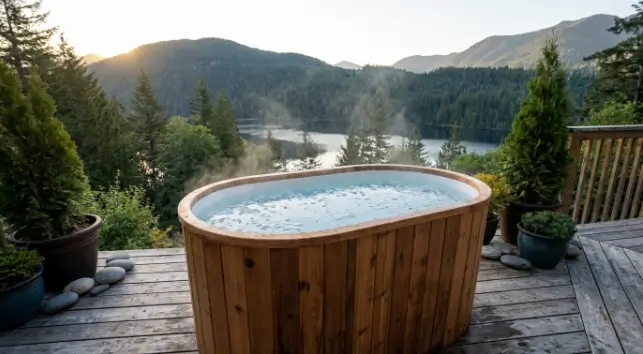
A cold plunge actually runs somewhat more efficiently in winter, since the chiller has less distance to cool water down from an already-cold ambient starting point, which can trim electricity use compared with summer months. The real winter concerns are freeze protection for exposed plumbing, ice management on and around the tub, and having a warm transition space ready immediately after getting out, not the chiller’s ability to hit a target temperature.
Does Cold Weather Actually Make the Chiller’s Job Easier?
In most cases, yes. A chiller sized to hold water in the high 30s to mid-40s Fahrenheit range has less work to do reaching that target when the surrounding air and incoming water are already cold, compared with fighting summer heat gain all day. Owners in genuinely cold climates sometimes notice their chiller cycling less often in winter, which can translate into a modest electricity savings relative to summer operation. This is the one part of cold-weather ownership that works in an owner’s favor rather than against it.
What Actually Needs Winterizing on an Outdoor Setup?
Exposed plumbing lines, fittings, and any water sitting in a pump or filter housing between uses are the real risk in sustained sub-freezing weather, since water expands as it freezes and can crack a fitting or split a line that was not built or insulated to handle it. Manufacturer cold-weather guidance typically covers pipe insulation, whether heat tape is recommended for exposed runs, and whether the system should keep circulating continuously during extreme cold snaps rather than sitting idle. Skipping this step is the most common cause of an expensive spring repair that a bit of foam pipe insulation or heat tape would have prevented for a few dollars.
What Happens to the Tub’s Surface When It Is Not in Use?
An uncovered tub in freezing air will start forming surface ice fairly quickly once ambient temperature drops well below the water’s own target range, which is both a nuisance to clear before a session and, over time, a source of extra strain on the chiller trying to maintain temperature under an ice layer. A well-fitted insulated cover cuts this down significantly, reducing both heat loss and ice formation between sessions, and it doubles as protection against snow and wind-blown debris landing directly in the water.
What Does a Realistic Daily Winter Routine Actually Look Like?
Someone plunging daily through a cold winter typically clears the cover, checks that no ice has formed on the surface, gets in for the planned session length, and then moves immediately into a warm indoor space or at minimum a heated changing area rather than lingering outside in wet clothes. That last part matters more in winter than any other season, since cold air on wet skin after a cold-water session compounds the body’s chill response instead of letting it recover gradually the way stepping into 70-degree summer air would. Towels, a robe, and warm socks staged right next to the tub, not fetched from inside afterward, make that transition much more manageable on the coldest mornings.
Does Snow and Ice Around the Tub Create a Safety Issue?
Yes, and it is one of the more overlooked parts of winter ownership. The deck, patio, or path leading to the tub needs regular clearing and, ideally, a non-slip surface treatment, since stepping out of cold water onto icy footing is a genuinely higher fall risk than the same step in dry summer conditions. A simple outdoor mat with grip, replaced or cleaned as needed through the season, and consistent snow clearing around the entry point reduce that risk considerably for very little cost or effort.
Is a Two-Person Tub a Good Fit for Year-Round Cold-Climate Use?
A larger tub holds more water and, with a properly sized chiller and a good cover, handles winter operation without much extra complication beyond what a single-person tub needs. For a household planning to use a cold plunge daily through a genuinely cold winter, checking a chiller’s rated capacity against the specific climate’s typical low temperatures before buying avoids an undersized system struggling on the coldest weeks of the year. Shoppers comparing a two-person model built for year-round outdoor use can view current pricing and chiller specs against a few other brands before deciding on capacity for a cold climate specifically.
What Should Someone Check on a Cover Before Winter Hits?
Not every cover sold with a cold plunge is built with genuine winter conditions in mind, so it is worth checking the specific insulation rating and how the cover handles accumulated snow weight rather than assuming any cover will do. A cover that sags or traps meltwater on top can eventually let moisture seep through at the seams, which defeats the purpose in exactly the season it matters most. Clearing heavy snow off the cover after a storm, rather than letting it accumulate for days, protects both the cover’s seal and the tub underneath. A properly rated winter cover is a small line item against the overall cost of the tub, and it is one of the few upgrades that pays for itself directly in reduced chiller runtime through the coldest months.
Does the Cold Itself Add to the Recovery Benefit?
Not meaningfully beyond what the water temperature itself provides. The evidence behind cold-water immersion, a modest association with reduced perceived soreness from a 2012 Cochrane review and improved short-term recovery markers from a 2023 Frontiers in Physiology meta-analysis, is about the water someone gets into, not the air temperature outside it. A winter session and a summer session at the same water temperature and duration are delivering essentially the same physiological input, so there is no evidence-based reason to seek out colder outdoor air on top of an already cold plunge.
Frequently Asked Questions
Does a cold plunge chiller work harder or easier in winter? Easier, generally, since it has less distance to cool water from an already-cold starting point, which can modestly reduce electricity use.
Can outdoor cold plunge plumbing freeze in winter? Yes, exposed lines can freeze and crack without insulation, heat tape, or a winterization routine, so manufacturer cold-weather guidance should be followed.
Is it safe to plunge into cold water when it is already cold outside? Many do it year-round, but towels, warm layers, and a warm space should be ready immediately after, since the post-plunge chill response works harder without one.
Should the tub be covered between winter sessions? Yes, an insulated cover reduces heat loss, keeps snow and debris out, and cuts down on surface ice forming between uses.
References
- Cold-water immersion (cryotherapy) for preventing and treating muscle soreness after exercise, Cochrane Database of Systematic Reviews, 2012
- Effects of cold water immersion after exercise on fatigue recovery and exercise performance: meta analysis, Frontiers in Physiology, 2023
- Effects of cold-water immersion on health and wellbeing: A systematic review and meta-analysis, PLoS One, 2025
By Erin Castellano